Basement Waterproofing for Brick Foundations: Key Considerations


Brick foundation basements have a character that newer concrete walls rarely match. They also have their own set of waterproofing challenges. Anyone who has worked on older homes knows the pattern: the basement smells damp after a storm, the paint on the lower wall begins to bubble, mortar joints turn sandy, and a white powder starts creeping across the brick surface. Homeowners often assume they need the same fix their neighbor used on a poured concrete foundation. That is where expensive mistakes begin.
Basement Waterproofing for brick foundations requires a different mindset. Brick is not one monolithic slab. It is a system of individual masonry units and mortar joints, and both materials behave differently than modern concrete. Brick absorbs and releases moisture. Mortar deteriorates over time. Older walls can bow, bulge, or lose bond strength if water pressure and freeze-thaw cycles are ignored too long. The waterproofing plan has to respect how the wall was built and how it has aged.
Why brick foundations fail differently
A poured concrete wall usually leaks through cracks, tie rod holes, honeycombing, or cold joints. A brick foundation leaks in a more distributed way. Water may enter through mortar joints, through the face of the masonry, through failed parging, around old utility penetrations, or from the joint where the wall meets the basement floor. Sometimes it is not a dramatic leak at all. It is persistent dampness that slowly damages the wall.
In older homes, many brick foundations were built before modern perimeter drainage standards became common. Some sit beside downspouts that discharge too close to the house. Others have exterior grades that have settled over decades, creating a shallow bowl around the structure. Add heavy clay soil, clogged gutters, or an asphalt driveway that funnels runoff toward the house, and a brick foundation can stay wet for months at a time.
One of the most overlooked details is the mortar itself. On a century home, the original mortar is often softer and more vapor permeable than modern brick mortar. That softness was not a defect. It was part of how the wall managed moisture. When those joints are repointed with a mortar that is too https://israelfsgq553.clearminster.com/posts/basement-waterproofing-for-historic-homes-without-compromising-character hard, moisture may stop escaping through the joints and start damaging the bricks instead. I have seen perfectly sound old brick spall badly after a well-meaning repair used an incompatible cement-rich mix. Waterproofing decisions on brick work best when they are conservative and informed by the wall’s age and materials.
The first task is diagnosis, not coating
A lot of basement leaks are misdiagnosed because the visible symptom is treated as the cause. Efflorescence, flaking paint, and damp smells are clues, not answers. Before recommending any waterproofing system, it helps to understand where the water comes from and under what conditions it appears.
A brick basement that gets wet only after wind-driven rain may have above-grade defects, such as failed pointing, cracked sills, or poor flashing at the exterior. A basement that seeps at the floor joint during spring thaw is usually dealing with hydrostatic pressure below grade. A wall that looks dry in summer but sweats in July may have a humidity and condensation problem rather than a true water intrusion issue. Those are not interchangeable problems, and they do not respond to the same repair.
Practical diagnosis usually starts outside. Walk the perimeter during or right after a rain if possible. Look for overflowing gutters, short downspout extensions, settled walkways pitching toward the house, garden beds built up against the wall, and splash zones where roof runoff hammers one section of foundation. Inside, look for a moisture pattern. Is the staining concentrated at the bottom two feet of wall, around one corner, or at isolated penetrations? Is the mortar soft enough to scrape with a key? Are there horizontal cracks, bulges, or displaced bricks that suggest structural movement?
Moisture meters can help, but old brick walls often tell the story with your eyes and hands. The smell of chronic dampness, the texture of the mortar, and the shape of the staining pattern reveal more than many homeowners expect.
Exterior water management solves more than interior coatings ever will
When I look at a wet brick basement, I usually assume the easiest gallon of water to manage is the one that never reaches the wall. Exterior water control is not glamorous, and it does not produce the instant cosmetic result of a fresh painted coating, but it is the most honest starting point.
Sometimes the entire problem comes down to roof drainage. A single downspout discharging beside a foundation can dump hundreds of gallons near the wall during a heavy storm. If that water lands in poorly draining soil, it migrates downward and presses against the basement wall. In clay soil, it may linger for days. Extending downspouts well away from the house, correcting gutter slope, and reshaping grade can cut water entry dramatically, often for far less money than a full waterproofing system.
Landscaping can work for or against the foundation. Mulch piled high against brick traps moisture. Dense shrubs block sun and airflow, which slows drying. Hardscape additions are another common culprit. A patio installed years after the house was built may cover the top of the foundation and direct runoff toward it. I have seen basement seepage vanish after a modest regrade and drainage correction, even though the homeowner had already been told they needed to seal the entire interior wall.
That said, exterior improvements are not always enough. If the wall is below grade for most of its height and the site naturally collects groundwater, true waterproofing may require excavation and subsurface drainage.
Excavation and exterior waterproofing on brick require care
Exterior waterproofing is often the best long-term solution for persistent below-grade leakage, but brick foundations need a lighter touch than many contractors realize. Digging down to the footing allows access to the outside face of the wall, where repairs can stop water before it reaches the masonry mass. The challenge is that older brick walls may not appreciate aggressive excavation, heavy equipment vibration, or careless pressure washing.
Once exposed, the wall has to be evaluated before any membrane is applied. Loose or deteriorated mortar should be repointed with a compatible mortar. Missing bricks need replacement. Bulges or displacement may require structural repair before waterproofing starts. If the surface is coated with old parging that has detached, it may need removal and selective reapplication. Waterproof membranes adhere only as well as the substrate permits.
For many brick foundations, the best exterior assembly includes a repaired masonry wall, a suitable waterproof membrane, a drainage board or protection layer, and a footing drain wrapped and bedded correctly for the soil conditions. The membrane choice matters. Some products bridge minor irregularities better than others, and some are more forgiving on older masonry. What matters most is that the installer understands the wall is not a smooth concrete panel. Every joint, recess, and uneven area has to be addressed properly.
Excavation also raises a sequencing issue. On older homes, it is often wiser to excavate in controlled sections rather than exposing the entire perimeter at once, especially where the wall shows age-related movement. This takes longer, but it reduces the chance of destabilizing the surrounding soil or overloading a fragile section of foundation.
Interior drainage has a place, but it is not the same as waterproofing the wall
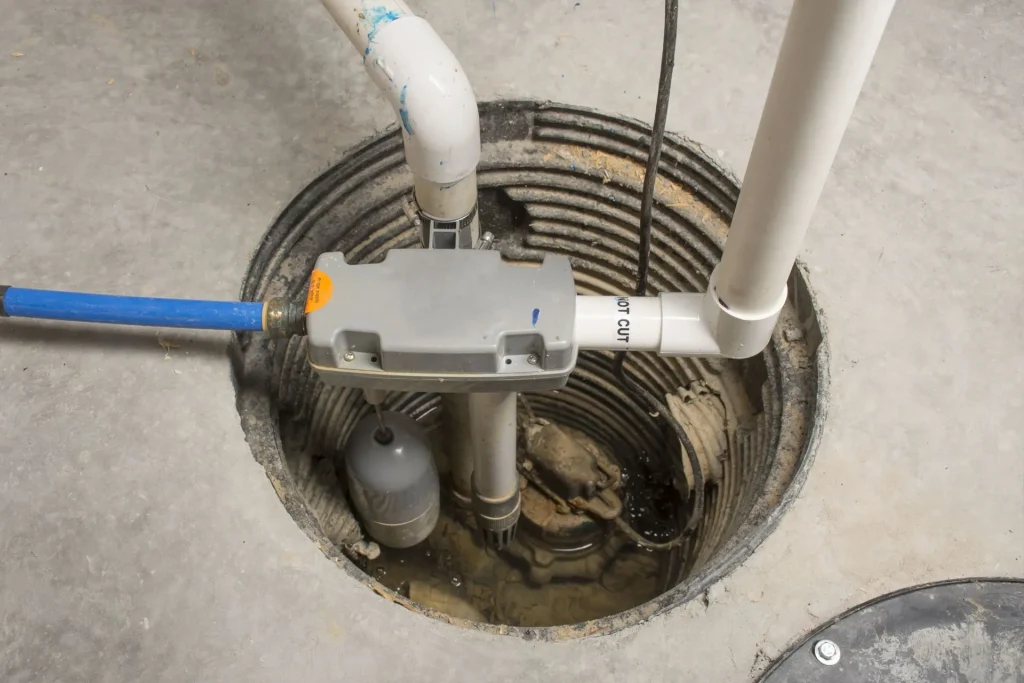
Many basement systems sold today are technically water management systems rather than true wall waterproofing systems. An interior perimeter drain with a sump pump can be very effective at collecting water that arrives under the slab or at the cove joint where the wall meets the floor. In a basement with recurring seepage, that can be the difference between a usable space and a chronic mess.
For brick foundations, though, it is important to be clear about what an interior system does and does not do. It manages water after it reaches the foundation area. It does not prevent the wall itself from getting wet from the outside. That distinction matters because saturated masonry still deteriorates over time, even if the interior stays relatively dry. Repeated wetting can weaken mortar, contribute to efflorescence, and worsen freeze-thaw damage above grade if moisture wicks upward.
There are situations where interior drainage is the right answer. Tight lot lines may make excavation impractical. Mature trees, porches, or additions can turn exterior work into a major undertaking. If the structural condition of the wall is acceptable and the goal is reliable water control with minimal disturbance, an interior system may be the practical choice. It just should not be sold as a magic cure for a masonry wall that is still being saturated year after year.
Mortar joints deserve as much attention as the bricks
If there is one detail that separates good brick foundation work from generic basement work, it is respect for mortar. Mortar joints are often the weakest path for water entry and the most vulnerable part of an aging wall. Once the joints become soft, recessed, or cracked, water finds them quickly.
Repointing can make a dramatic difference, but only when done correctly. The old, loose mortar should be removed carefully without damaging adjacent brick edges. The replacement mortar should be compatible in hardness, permeability, and appearance. On older brick, a softer lime-rich mortar is often more appropriate than a hard modern mix. This is not nostalgia. It is building science. You want the mortar to remain the sacrificial element that accommodates movement and moisture, rather than forcing that stress into the brick units themselves.
Homeowners sometimes ask whether they can simply coat the interior wall with hydraulic cement or masonry sealer instead of repointing. In my experience, that is usually a short-term cosmetic move. If the joints are failing, the wall needs joint repair. Surface products may hide the problem for a season, but water and vapor pressure usually find a way to expose it again.
Beware of interior sealers that trap moisture
Interior waterproof paints and cementitious coatings are heavily marketed because they are easy to explain and easy to sell. Some have value in specific conditions. Many are misused on brick foundations.
A brick wall below grade almost always contains some moisture. If you apply a coating to the interior face without controlling the exterior water load, you may trap moisture within the wall. That can lead to blistering, peeling, and accelerated masonry damage. I have seen basements where multiple layers of waterproof paint were hanging off the wall in sheets, with damp, crumbling mortar behind them. The product did exactly what physics allowed it to do, which was not much.
Breathable treatments exist, and they can be part of a broader strategy, especially above grade or on less severe walls. But the phrase “waterproofing paint” should make any brick specialist cautious. Brick foundations usually need moisture management, not a cosmetic lid clamped onto a damp wall.
Structural issues can change the entire waterproofing plan
Waterproofing and structural repair often overlap in brick basements. A wall that has bowed inward, rotated, or developed stepped cracking may not be a candidate for simple drainage work alone. Ongoing moisture pressure can accelerate movement, but movement can also create new leakage paths. Treating one without considering the other is risky.
Here are the warning signs that should slow the project down and prompt a deeper assessment:
- Horizontal displacement or visible bowing in the wall plane.
- Large stair-step cracks through brick and mortar.
- Bulging sections, especially near mid-height.
- Powdering mortar that has lost significant depth or bond.
- Doors or framing above that show related settlement or racking.
If those symptoms are present, waterproofing should be coordinated with a mason or structural professional familiar with older foundations. Sometimes the sequence matters more than the products. Rebuild or stabilize first, then manage water. Other times, reducing exterior water pressure is the first step needed to preserve the wall during repair. Good judgment comes from reading the whole building, not just the wet spot.
Ventilation, insulation, and condensation are often part of the story
Not every damp brick basement is leaking in the way people imagine. During humid weather, warm indoor air can condense on cool masonry surfaces. Pipes sweat. Rim joists stay cool. A dehumidifier fills its bucket every day, and the owner assumes groundwater is pushing through the wall.
Condensation can coexist with actual seepage, which complicates diagnosis. The practical clue is timing. If the basement feels damp in hot, humid weather regardless of rain, humidity is likely involved. If the wall darkens after storms or snowmelt, bulk water is likely the main driver. Often both conditions need attention.
A sensible moisture strategy may include air sealing at the rim joist, insulation that does not trap moisture against the masonry, and mechanical dehumidification during peak seasons. What should be avoided is finishing a damp brick basement with materials that mold easily or conceal ongoing moisture damage. I have opened finished walls that looked fine from the room side and found blackened furring strips and decayed mortar behind them. Brick rewards patience. Finish it only after the moisture pattern is genuinely understood.
Cost, disruption, and choosing the right scope
Homeowners often want a simple answer to the question, “What will it cost?” Brick basement waterproofing rarely offers one tidy number. The range can be wide because the scope changes based on access, wall condition, site drainage, depth, local labor rates, and whether structural masonry work is needed.
A modest project might involve gutter corrections, downspout extensions, minor regrading, and selective repointing. A far more involved job could mean excavation to footing depth, full wall repair, membrane installation, new perimeter drainage, a sump system, and restoration of walkways or landscaping. The second category is expensive, but when done properly, it changes the moisture behavior of the entire basement. The first category is often worth trying when the symptoms are limited and the exterior defects are obvious.
What matters is not choosing the cheapest line item. It is choosing the measure that addresses the dominant source of water. Spending money on interior coatings when the grade pitches toward the house is wasteful. So is paying for excavation if the wall is mostly suffering from above-grade rain splash and failed mortar joints around window wells.
Questions worth asking before you hire anyone
A good contractor should be comfortable discussing materials, diagnosis, and limitations. If every basement gets the same product and same script, that is a warning sign, particularly with brick foundations.
Ask how they will determine where the water is entering. Ask whether the mortar will be tested or at least evaluated for compatibility before repointing. Ask what happens if excavation reveals structural deterioration. Ask whether the proposed system keeps water out of the wall or simply manages it after entry. Ask how they protect older brick during prep. People who work on old masonry regularly tend to answer these questions with specifics, not sales language.
One of the most useful conversations is about what not to do. Experienced masons and waterproofers usually have a short list of mistakes they refuse to make, even if a client requests them. That restraint is a good sign.
A durable result usually looks less dramatic than the sales pitch
The best Basement Waterproofing work on brick foundations is often unremarkable after it is finished. Downspouts discharge farther away. The grading is subtle but effective. The mortar joints are sound. Water pressure is relieved before it builds. The basement smells neutral after rain. No coating is flaking off the wall because no one tried to force the wall to behave like poured concrete.
Brick foundations can last a very long time when moisture is managed intelligently. They do not need trendy products or aggressive shortcuts. They need diagnosis, compatible materials, and respect for how old masonry works. If the repair strategy keeps bulk water away, allows the wall to dry appropriately, and addresses structural weakness before it spreads, the basement usually becomes far more stable than its age suggests.
That is the real goal. Not a freshly painted wall for one season, but a foundation that can handle weather, soil moisture, and time without quietly falling apart behind the finish.
ARD Waterproofing
98 Smull Ave, West Caldwell, NJ 07006, United States
+1 917-691-8411
FAQ About Basement Waterproofing
Can you 100% Waterproof a Basement in West Caldwell?
A properly designed system can substantially reduce basement water intrusion, but no method can promise protection against every flood, equipment failure, or future change in site conditions. The first step is identifying whether moisture comes from surface runoff, groundwater, plumbing, or condensation. Solutions may include grading and gutter improvements, drainage, foundation repairs, and a sump system. Review the specific coverage and exclusions of any written warranty.
How much does it cost to professionally waterproof a basement in NJ?
There is no single price that fits every basement. Cost depends on the cause of the leak, the area needing work, access, excavation requirements, drainage design, sump equipment, and restoration of disturbed finishes or landscaping. Request an on-site assessment and an itemized written estimate that explains the scope, exclusions, and maintenance requirements before comparing proposals.
How long does foundation waterproofing last in West Caldwell, NJ?
Service life varies with the waterproofing materials, installation quality, soil and water conditions, and maintenance. Drainage components and pumps may require servicing or replacement even when other parts of the system remain functional. Keep gutters, drainage outlets, and sump equipment maintained, and have recurring leaks or changes in foundation condition assessed. Ask for product-specific expectations and written warranty terms rather than relying on one lifespan for the entire system.